

Campaigners have reported high levels of bacterial pollution at six locations along the River Ure following the latest round of testing by citizen scientists.
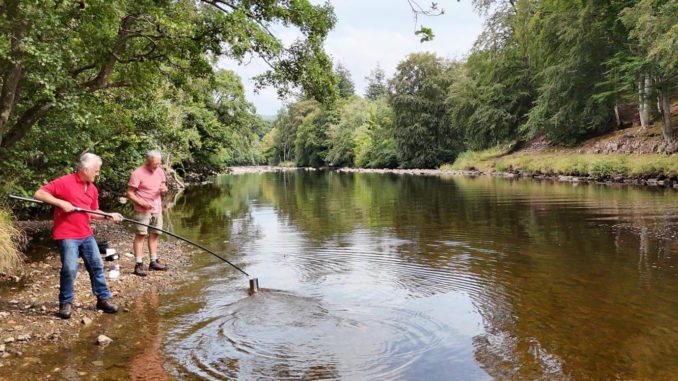
Members of Stop Ure Pollution (SUP) joined forces with the Yorkshire Dales River Trust to carry out a full-river survey on August 26, with samples taken at 46 sites.
Yorkshire Dales River Trust teams sampled 14 locations on the lower Ure between Masham and Boroughbridge, while six SUP teams tested the river and tributaries at 32 sites between Lunds and Jervaulx.
The exercise repeated testing carried out two years ago, allowing results to be compared to assess changes in the river’s health over time.
SUP volunteers also collected water from six locations for same-day Bactiquick testing, which measures bacterial endotoxins.
Under the system, readings below 42 Endotoxin Risk Units (ERU) are classed as low risk, 43 to 57 as medium risk and readings above 58 as high risk.
SUP said all six locations recorded readings above 97, with the highest result of 142 at Middleham.
The group said the results represented levels which could pose a risk to human and pet health.
SUP members Prof Richard Loukota and Mike Grace have also been carrying out regular testing at Aysgarth Falls and Ulshaw Bridge since June 2025.
The group said just two low-risk results had been recorded during that period, one in February and another in March this year.
Meanwhile, underwater footage taken by SUP member Toby Milbank at Bainbridge on August 26 showed what the organisation described as significant eutrophication — excessive plant and algal growth associated with high levels of nutrients such as nitrogen and phosphate.
SUP attributed the problem mainly to agricultural run-off and sewage discharges, including from treatment works and private septic tanks.
The group also raised concerns about the Yorkshire Water treatment plant at Worton, claiming there was evidence of poorly treated sewage entering the Ure. SUP said it had reported its concerns to the Environment Agency.
Further samples collected during the survey have been sent to independent laboratory ALS for analysis, with testing funded through a Community Lottery Fund grant.
SUP plans another river-wide round of bacteriological testing on September 30, followed by further testing at the end of October.
The results are due to be presented at the group’s annual meeting at Leyburn Methodist Church Hall at 7.30pm on November 24.
Be the first to comment