

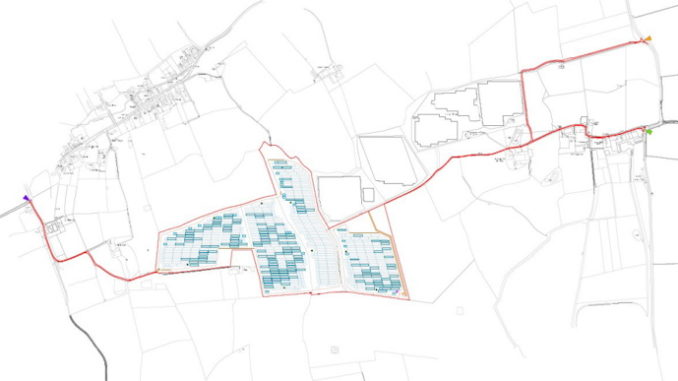
More details have been revealed on controversial plans for a 23.5MW solar farm in North Yorkshire after further documents were filed with planners.
Developer Enviromena has submitted a new environmental screening request to North Yorkshire Council for the scheme at East Appleton Farm, at Tunstall, near Catterick Garrison.
The latest documents reveal that an underground electricity cable approximately 500 metres long would run south from the development across third-party land to a grid connection point.
The cable would be installed within a six-metre-wide corridor, with the developer stating the work would cause only temporary disruption during construction.
The proposals also include solar panels reaching up to 2.65 metres above ground level, transformers, two substations, internal access tracks and security fencing up to 1.9 metres high, with CCTV cameras around the perimeter.
The solar farm would operate for 40 years before being removed and the land returned to agricultural use.
The latest application follows an earlier screening decision in February 2025, when the council stated the solar farm would not require a full environmental impact assessment.
However, the grid connection route had not been identified at that stage, prompting the developer to submit a new request covering the entire project.
The development is proposed alongside two existing solar farms, Stripe Solar Farm and East Appleton Solar Farm, each with a generating capacity of 5MW.
If approved, the new scheme would take the combined generating capacity of the three solar farms to approximately 33.5MW.
The concentration of solar developments around Tunstall has previously attracted controversy, with developers accused of ‘salami slicing’ projects rather than considering their combined impact on the countryside.
More than 140 objections to the development have been submitted, with 28 people giving their support to the project.
The latest report acknowledges the new development would significantly increase the amount of solar infrastructure visible from a bridleway running along the site’s eastern boundary.
However, the developer’s consultants conclude that the wider landscape impact would be relatively limited, with additional hedgerow and tree planting helping to reduce the visual effects over time.
The report also says assessments have found no significant impact from reflected sunlight on nearby roads, homes or aviation activity at RAF Leeming.
The agricultural land involved is classified as Grade 4, with the developer arguing that most of the site would remain available for grazing between and beneath the solar panels.
The company maintains that the development, including the new grid connection, is unlikely to cause significant environmental effects and should not require a full environmental impact assessment.
Enviromena declined to comment when approached by the Local Democracy Reporting Service.
Be the first to comment