

Major changes to the way hospital care is delivered across Teesside, East Durham and North Yorkshire are being proposed to ensure NHS clinical services remain sustainable.
North Yorkshire Council’s scrutiny of health committee heard how North Tees and Hartlepool NHS Foundation Trust and South Tees Hospitals NHS Foundation Trust were now working in partnership on the plans as University Hospitals Tees.
Councillors were told “radical changes” were needed to ensure hospital services remained sustainable in the future.
The changes are set to include a shift to providing more care in the community and people’s own homes, and a focus on prevention through education.
The ‘hospital at home’ service could be expanded with the equivalent of 500 extra beds created, while hospital at home services for children and young people could be added.
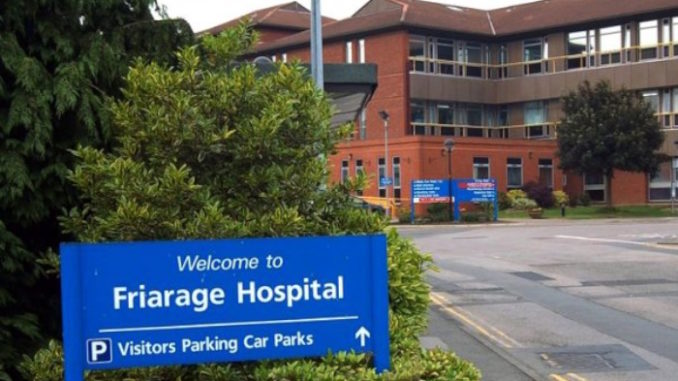
The strategy proposes increasing activity in the two surgical hubs at the Friarage Hospital in Northallerton and the University Hospital of Hartlepool.
Specialist services would then be consolidated at either James Cook in Middlesbrough or the University Hospital of North Tees in Stockton, while both hospitals would maintain an emergency department.
Under the plans, James Cook Hospital would focus on areas such as urology, spinal services, non-ambulatory trauma and paediatrics.
The Stockton hospital would specialise in general medicine, gastroenterology, endocrinology and diabetes, respiratory (chest) medicine and elderly care medicine, alongside general surgery.
Children’s and young people’s services could also be consolidated to create a specialist children’s hospital on one site.
An overhaul of outpatient services is also planned.
Councillors were told that doing nothing was not an option, with an extra 112 beds needed within the next 15 years under the current model.
Matt Neligan, chief strategy officer at University Hospitals Tees, said: “We’ve got a number of services that are duplicated across Teesside; we’ve got James Cook University Hospital and we’ve got University Hospital North Tees, which are six miles apart as the crow flies and haven’t worked closely together over the last few decades.
“That is a big issue that causes us to think about what our ambition might need to be. We’ve got a number of workforce and performance pressures, and increasingly the financial pressures create pressure on our service.
“That’s exacerbated by the growth in the population so we know that if we stand still the demand on inpatient emergency care is going to grow by about 40 per cent over the next 15 years.”
“That requires us to think differently about the model of care that we provide.”
The meeting was told that the University Hospital North Tees had a current maintenance backlog of £126m, while James Cook Hospital’s private finance initiative contract costs £83m a year.
A significant rise in demand for hospital services is also forecast, driven by a rapidly ageing population and increasing levels of frailty and long-term illness.
Projections show that the proportion of people aged over 70 is expected to grow at a faster rate than other UK regions. This demographic shift is set to place considerable pressure on urgent and emergency care services over the coming years.
Between 2023 and 2040, A&E attendances among over-70s are predicted to rise by 39 per cent, while inpatient hospital spells for the same age group are expected to increase by 36.3 per cent.
NHS chiefs are currently setting out their case for change, with more detailed plans and public consultations expected in the coming months.
Be the first to comment