

Green energy developers have been accused of ‘salami-slicing’ solar schemes in the North Yorkshire countryside to avoid national scrutiny.
But the claim has been categorically denied by a senior executive at a company behind several major solar schemes in the county.
The accusation comes from objectors to a 23.5MW solar farm planned for agricultural land south of Tunstall, near Catterick Garrison.
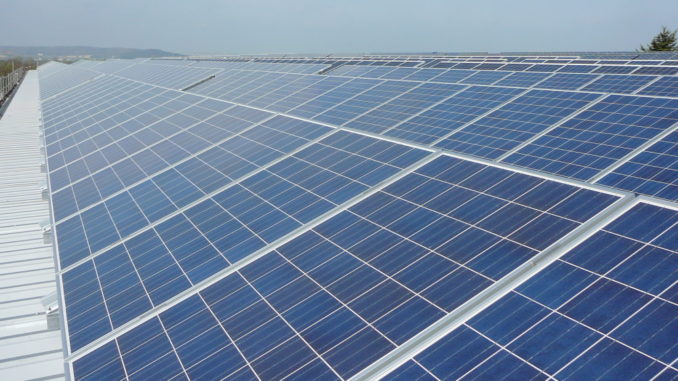
A planning application has been submitted for a 23.5MW solar farm on land at East Appleton Farm.
Applicants Enviromena say the scheme would produce enough renewable energy to power more than 11,000 homes a year.
But more than 30 objections have been filed with North Yorkshire Council by local residents.
One of those is from the D’Arcy family, who have a small holding near Tunstall, which they said would be surrounded on two sides by solar panels if the scheme was approved.
In their objection, the family said that the fact that several solar schemes had been proposed for the Catterick and Richmond area, including Tunstall, plus the operational Skeeby scheme and a solar farm planned for Brompton-on-Swale, suggested “salami-slicing” — a tactic of dividing a single development project into numerous smaller applications to avoid stricter regulatory scrutiny — was taking place.
Solar farms over 50MW are deemed to be a Nationally Significant Infrastructure Project (NSIP) and are decided by the national Planning Inspectorate rather than the local planning authority.
The objection added: “The combined generating capacity of these three projects alone is approximately 112.7MW, more than double the 50MW NSIP threshold.
“The fact that multiple projects are being brought forward separately, each sized at or just below the 50MW limit, yet connecting to the same point in the grid, is powerful evidence of salami-slicing.
“This is a strategy to have a nationally significant project determined at the local level, thereby avoiding the more rigorous national-level scrutiny of the NSIP process.”
Local residents have raised a number of other concerns about the Tunstall plan, including the loss of good agricultural land, concerns about flooding, the impact on growth of crops and the solar panels being an eyesore.
Concerns have also been voiced that the developer will in the future submit plans for a larger solar scheme and potentially a battery energy storage scheme for the Tunstall area.
In response, Lee Adams, chief commercial officer at Enviromena, said the company, which is also behind the Stell Solar Farm plans near Bedale, “strongly rejected” any suggestion of deliberately avoiding national scrutiny.
He added: “Our projects are designed, submitted and determined in accordance with the planning framework that applies to their size and location. Where projects meet thresholds requiring national determination, they are progressed through that process.
“We also take our responsibility to local communities very seriously. Our proposals include extensive environmental assessments and community engagement to ensure impacts are minimised and that each project contributes positively to the UK’s clean energy transition.”
Mr Adams, who said his company was unconnected to the Skeeby and Brompton schemes, said the Tunstall project would connect to the grid via a pylon several hundred metres to the south of the solar farm.
He said capacity had now been reached at this connection, meaning no further energy schemes could be added in that area south of the village.
Be the first to comment