
North Yorkshire councillors are expected agree a 4.99 per cent increase in their authority’s share of the council tax bill when they meet next week. Joe Willis looks at the reasons why the maximum rise allowed is almost inevitable.
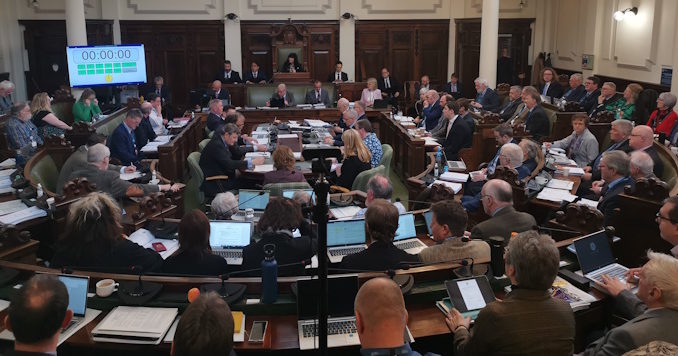
All 90 of North Yorkshire Council’s elected members will gather in the main chamber at County Hall in Northallerton next Friday with the main job of the day being to agree the authority’s 2026/27 budget.
It’s a sizeable budget of around £785m. Back in the day, take your pick which one before 2010, the majority of the council’s income would have come from central government.
But faced with a hefty deficit, the Conservative and Liberal Democrat coalition government and the then Chancellor George Osborne decided to save some money by cutting grants to local authorities.
The settlements have gone up and down in intervening years, but no government — Conservative or Labour — has made serious efforts to row back on this policy.
To cope with the loss of income from the government, many councils hiked up council tax, as well as trying to find savings of their own.
For North Yorkshire, the result of years of reduction in central government funding and increases in council tax means that for 2026/27 the council will get around £135m from the government and £108m from business rates, but council tax payers will contribute more than £524m.
Hopes were high that the Government might find some extra money for local authorities from its recent fair funding review. Indeed, ministers announced an extra £5bn for English councils over the next three years and said that North Yorkshire Council would get an additional £101m in what it calls ‘core spending power’ over this period.
It sounded good until the numbers were crunched. What they revealed was that every penny of that ‘increase’ actually came from the 4.99 per cent council tax rise that the council says it has little choice but to levy over the next three years, with 4.99 per cent being the maximum allowed without holding a referendum.
Council leader Carl Les says that for every one per cent below 4.99 per cent they made, they would need to find a further £5m, meaning they really do have no other options.
He adds: “The government is predicating core spending power, as they call it, and saying you have to put your council tax up by five per cent to get your core spending power.
“Now you do have a choice not to do that, but then the government would then say ‘well that means that you don’t need it’ and ‘your pressures are not so severe if you’re not going to raise your own tax we’re not going to give you any extra’.”
Even with a maximum council tax increase, the financial picture is far from rosy. The authority points out that rising costs — due to things like inflation, the increase in National Insurance contributions and spiralling demand for social care for adults and children and young people — mean that never mind talk of extra money, it will need to make a £17m dip into its reserves just to balance the books this year.
There’s other issues at play, of course. The Conservative-run council believes the Labour-run Government has taken money from rural areas like North Yorkshire and given it to urban areas with higher levels of deprivation, and has ignored or failed to understand that it costs more to deliver services like homecare, waste collections and road repairs, in rural areas.
There is plenty of evidence to suggest this has been the case, with the council is still smarting from the removal of the £14.3m rural services grant, which helped meet these extra costs, last year.
Moving forward though, the announcement of a three-year settlement does give the council some certainty over its finances.
It also gives the public some confidence that council tax bills are only going in one direction in coming years and that’s up.
Be the first to comment