

Nearly 2,000 years ago, Roman legions set out from their fortress at York with a clear aim: To conquer the north by defeating and controlling the local British tribes, particularly the Brigantes.
They constructed a network of camps and forts connected by military roads, systematically occupying new territory and carving their mark into the land.
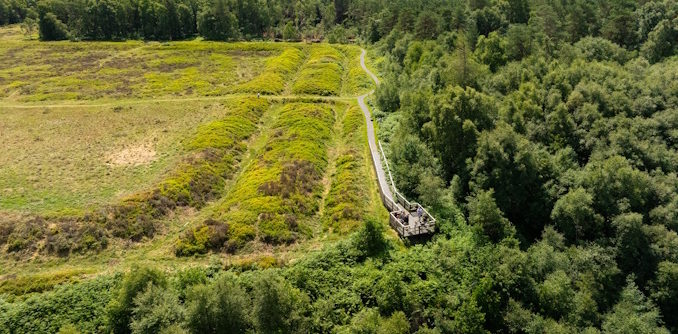
Now, visitors to the North York Moors can step back into this dramatic chapter of Britain’s history, with a brand-new illustrated trail at Cawthorn Roman Camps, one of the most significant Roman sites in the region.
The one-mile Edge of Empire trail invites people to experience what life was like for Roman soldiers stationed at Cawthorn and to imagine the tense encounters with the Parisi and Brigantes tribes who lived and farmed in the surrounding landscape.
“Cawthorn is an extraordinary example of Roman military strategy, preserved in the peaceful heart of the North York Moors,” said Miles Johnson, Head of Historic Environment at the National Park Authority.
“The site consists of a complex of earthworks, including two forts and a temporary camp with an unusual layout. At one point it was thought the camps were only used for training troops, but now we believe they had a strategic role in exercising control over local tribes and perhaps for short-term occupation during the construction of military roads across the region.
“The new trail makes it possible to envisage this history and explore the area’s Roman past in a meaningful and accessible way.”
Featuring a series of colourful interpretation panels, vivid artistic impressions and engaging historical insights, the trail brings to life the three distinct Roman fortifications, including the more mysterious and possibly experimental temporary camp.
In a modern twist on ancient heritage care, a herd of Royal Golden Guernsey goats have been enlisted to protect the site, not as soldiers, but as conservation grazers. These hardy, light-footed goats are now roaming the camps as part of a pioneering effort to prevent invasive scrub, bramble, and bracken from damaging the precious archaeological remains and heathland habitat. The goats come from Mossy Oaks, based at Castle Howard, who have one of the largest herds in the country of these native, rare breed goats, and specialise in using them for bespoke habitat management tasks.
Jacob Lawson, Conservation Officer at the North York Moors National Park Authority, said:
“They’re doing exactly what goats do best and eating their way through the vegetation that was beginning to encroach on the archaeology and is quite dense in places. This is a ten-week trial and something we’ve never done before, but it’s sustainable and a low-impact way to protect one of Britain’s most valuable Roman sites, and so far it’s been extremely positive.”
Signs will be in place throughout the trial asking dog walkers to keep their pets on a lead and reminding owners that livestock worrying is an offence.
The new trail has no steps or stiles, and there are sections suitable for assisted wheelchair users and all-terrain buggies.
For more information, visit northyorkmoors.org.uk/the-romans
Be the first to comment