

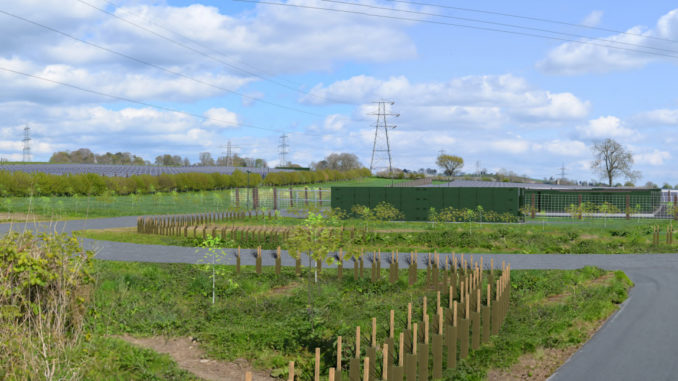
Controversial plans for a large solar farm and battery storage facility near a North Yorkshire village are to be reconsidered by the Planning Inspectorate after a High Court challenge overturned the decision to approve the development.
The Woolpots solar farm scheme, near Husthwaite, between Thirsk and Easingwold, was granted permission on appeal last October despite being refused by North Yorkshire Council.
However, the decision was subsequently challenged by local resident Philip Hewitson, who argued that the planning inspector had failed to properly consider the impact on the nearby Howardian Hills National Landscape.
The legal challenge was successful, with the High Court quashing the planning permission in August.
The Planning Inspectorate has now confirmed that the appeal will be reconsidered, with a reopened hearing provisionally scheduled to take place on Wednesday, November 25.
However, opponents of the development, including Mr Hewitson and Husthwaite Parish Council, are calling for a full public inquiry instead.
They argue that changes to national policy and new evidence since the original appeal mean the proposals should be subjected to more detailed scrutiny, including cross-examination of witnesses.
The scheme, proposed by Woolpots Solar Farm Ltd, would cover approximately 126 acres of farmland and include solar panels capable of exporting around 32MW of electricity.
It would also incorporate a battery energy storage facility with a capacity of 37MWh, comprising up to 32 battery containers and associated infrastructure.
North Yorkshire Council previously refused permission over concerns about the impact on the surrounding landscape, views from the Howardian Hills and the loss of high-quality agricultural land.
Opponents say around 70 per cent of the proposed development site comprises the best and most versatile agricultural land.
They have also raised concerns about the cumulative impact of solar developments in the area and the safety of the proposed battery storage facility.
Husthwaite parish councillor Sarah Aspinall said there was growing concern about the concentration of solar developments across the wider Hambleton area.
She said: “There has also been a steady increase in the number of pending and approved solar and battery storage applications in the wider Hambleton area, with many concerned – both within and outside our parish – about cumulative impact and industrialisation of the countryside.”
She added that updated national fire safety guidance for large battery storage schemes was particularly relevant because of concerns about the proposed facility’s proximity to the village primary school.
Mr Hewitson said the development would threaten agricultural land and the area’s rural character.
He said: “There are a series of crises – energy security, food security, climate change, nature recovery and housing – placing the countryside under intense pressure.
“Predatory solar development on prime agricultural land compromises long-term food security and rural heritage for short-term energy convenience.”
The legal challenge centred on whether the planning inspector had properly addressed strengthened legislation requiring public bodies to seek to further the conservation and enhancement of designated National Landscapes.
The High Court’s decision does not mean the solar farm must be refused permission, but requires the appeal to be determined again.
The applicant has not responded to requests from the Local Democracy Reporting Service to comment on the scheme.
Be the first to comment