
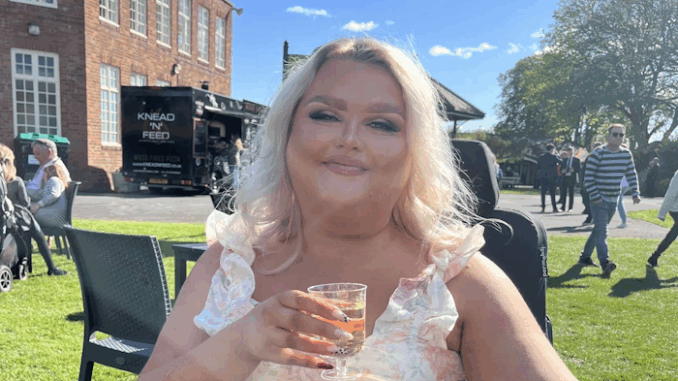
A North Yorkshire woman who needed 12 units of emergency blood after she was hit by a tractor in a catastrophic accident that saw her lose her right leg is backing an NHS plea for more donations of specific blood types – including the vital O negative type that saved her life.
Lucie Maguire was dragged along the road beneath the tractor’s 10-tonne trailer after the car she was travelling in with her mum Sue broke down on a country lane in North Yorkshire in January 2021.
Lucie, 24, was on her way home from her job as an apprentice nursery worker and had just stepped out of the car to help Sue out of the driver’s side when the accident happened.
She saw headlights coming towards her and had no time to react before she was hit by the tractor and was trapped in the back wheel of its trailer. She was dragged along the road, leaving her with multiple injuries and in danger of bleeding to death from a severed artery in her pelvis.
Fortunately paramedics arrived quickly and were able to stabilise Lucie at the roadside by transfusing six units of O negative blood. O negative is known as the universal type as it can be given in emergencies when a person’s blood type is unknown.
On arrival at hospital Lucie was given another six units of O negative before being placed in an induced coma. She had broken her back, shattered her pelvis and suffered internal injuries, and eventually her leg was amputated.
The NHS currently needs more O negative donations to ensure blood is there for emergency situations and patients like Lucie. It is also appealing for more B negative and Ro donors to come forward as stocks of these three critical types remain under pressure in the lead up to Christmas.
Lucie, who lives in Kirkby Malzeard, near Harrogate, said: “In the moments after my accident I had no idea how bad my injuries were. My leg just felt uncomfortable and wet. I thought it was water but when the paramedics moved me I saw a big puddle of blood.
“The ambulance crew were incredible. But there were 12 other people who saved my life that night – the blood donors. Without the transfusions at the scene I would not have survived the journey to hospital. Blood donors are the first responders you don’t see.”
Lucie spent 18 months in Leeds General Infirmary and needed blood on several more occasions.
“I needed blood during my amputation surgery, skin graft and other operations. There were times I’d be feeling unwell on the ward because of low haemoglobin, and I’d need a transfusion which was at least two bags of blood each time,” she said.
“I wouldn’t be alive today without blood donors. When you go through a lot of treatment like I have it really opens your eyes to how important blood donation is and how amazing those people who give blood are.”
Lucie continues to undergo rehabilitation but is now able to live independently with the support of a carer after moving out of her parents’ village pub home. She uses a power assisted wheelchair and hopes to try prosthetics in the future.
Lucie is a volunteer ambassador for the charity Day One Trauma Support, which supports people affected by major physical trauma. She is also committed to spreading the word about blood donation.
“Before my accident I had wanted to give blood but I never got round to it. Now as a blood recipient I can’t. So I do the next best thing and ask others to donate, hoping they are inspired by my story,” she said.
“Some of my friends have started giving blood which is great as I know the NHS needs more young donors. And my mum and dad are always drumming up support at their pub. It’s the least we can do after everything that blood donors have done for me. I owe them my life.”
The NHS is appealing for more O negative, B negative and Ro donors to make an appointment to donate in the lead up to and over the festive period. Hospitals are currently working hard to reduce elective surgery waiting lists and this, alongside ongoing commitment to high numbers of routine blood transfusions for conditions including sickle cell, is leading to high demand for these blood types.
There are around 71,000 appointments available at donor centres and community sessions between now and the start of January. Teams across the country collect blood every day of the year apart from Christmas Day and New Year’s Day.
Gerry Gogarty, Director of Blood Supply for NHS Blood and Transplant, said: “Blood donations are critical to saving lives after traumatic injury.
“For Lucie, transfusions not only ensured she survived her accident but were also vital in her ongoing treatment, demonstrating some of the many ways that donors save and improve lives every day.
“It is wonderful to hear about Lucie’s recovery and we are grateful to her and her family for raising awareness of blood donation. Right now the NHS needs new and existing donors to come forward and fill appointments to help blood stocks during the crucial festive period.
“We especially need more O negative, B negative and Ro donations. Please book an appointment for the coming weeks and help ensure that patients like Lucie can continue to receive the lifesaving blood they need.”
Blood is constantly needed to help the NHS treat patients with cancer, blood disorders and those suffering medical trauma or undergoing surgery. Blood can be split into parts after donation, so each donation can save or improve up to three lives.
Register today and book appointment at www.blood.co.uk, the NHS Give Blood app or call 0300 123 23 23.
Be the first to comment